April 29, 2026
How to choose a boudoir photographer: 8 questions worth asking
A practical guide to choosing the right boudoir photographer. The questions to ask, the red flags to watch for, and the things that actually matter.
By Jennifer Marilyn
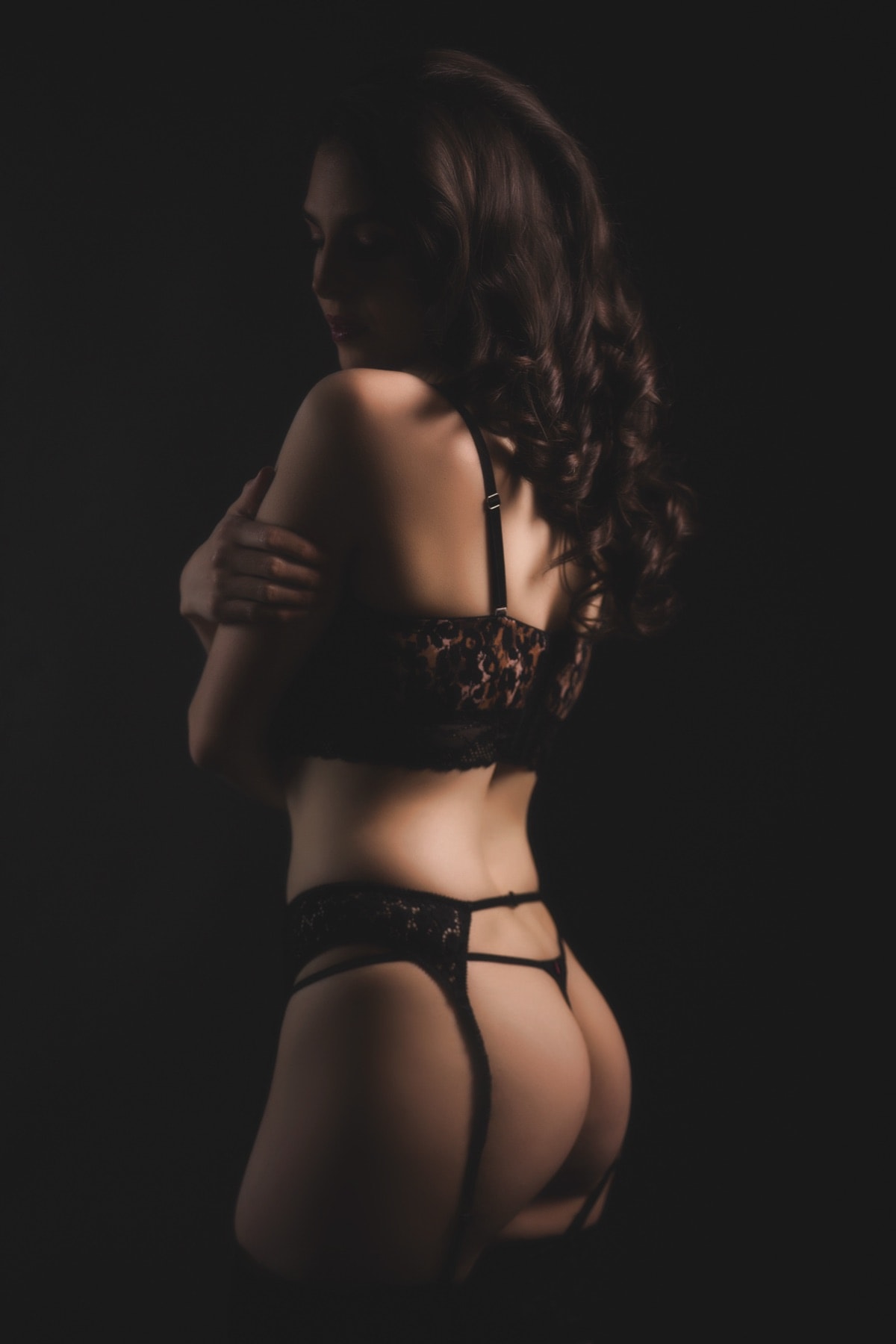
Choosing a boudoir photographer is unlike choosing a portrait or wedding photographer. The work is intimate. The vulnerability required is significantly higher. The cost of choosing wrong, in the form of a session you regret or a photographer who mishandles the experience, is higher too. Most clients spend more time comparing wedding photographers than boudoir photographers, when arguably the opposite ratio would serve them better.
This guide is the version of "how to compare studios" we wish more first-time clients had before they reached us. It is not specific to our studio; it is the framework we would give a friend.
Why the standard "look at the portfolio" advice is incomplete
Most online advice for choosing a boudoir photographer reduces to "look at their portfolio and see if you like the work." That is necessary but insufficient. A portfolio shows you what is possible with that photographer, not what is typical. A studio's published work is almost always the top 5% of what it actually produces. The question worth asking is what your specific session will produce, which is determined less by talent and more by direction, lighting craft, communication, and how the studio handles vulnerability.
The eight questions below are the ones that surface those things.
1. Who is in the room during the session?
A boudoir session should have the photographer and the hair and makeup artist in the room. Maybe a studio manager for setup. That is it. No assistants you have not met. No additional crew. No partners or friends of the studio team.
If a photographer is vague about who is present, or says "just me and an assistant" without naming the assistant, push for clarity. The answer should be specific and the names should be familiar by the time you book.
The follow-up question is whether the team is all-female. A meaningful portion of clients only book with all-female teams, including ours. This is a fair thing to ask and a fair thing to make a decision around.
2. How is direction handled?
The single biggest predictor of whether your session will produce work you love is how the photographer directs you. Some photographers leave you to "be natural." Most clients find this terrifying and the resulting work tends to look stiff or anxious.
The opposite extreme is photographers who manhandle you into poses. That is not direction; that is choreography, and it produces work that looks performative.
The ideal is verbal direction: where to put your hands, how to angle your shoulders, where to look, when to breathe out. Constant calling of micro-adjustments without ever needing to physically reposition you. Ask any photographer you are considering how they direct. Their answer should be specific and confident, not vague.
3. What does the post-production look like?
There are two extremes in boudoir retouching, and you want a photographer somewhere in the middle.
Heavy retouching: Skin smoothed to plastic, body reshaped, features adjusted. The work is technically beautiful but rarely looks like you. Clients sometimes love these images in the reveal and then feel detached from them years later.
Minimal retouching: Distractions left in, skin texture untouched, light not balanced. The work feels raw and honest but can also feel like a cheaper portrait session than what you paid for.
The middle: light correction, dust and distraction removal, skin softening where necessary, body kept as body. Ask to see "after" retouching examples or talk through what a photographer's retouching approach actually is. They should have an articulate answer.
4. How transparent is the pricing?
Hidden pricing is the single biggest red flag in this industry. If a studio's website says "investments starting at" without listing real numbers, you are about to get hard-sold at the reveal appointment. If pricing is broken into a session fee plus a-la-carte products, ask how the products are priced and to see real examples before you book. The answer should be concrete and in writing (we publish our session fees plainly and our art directors build your quote after the session, never as a surprise at the reveal).
A studio that will not give you pricing in writing before booking is a studio that is planning to apply pressure to you when you are emotional. Boudoir reveals are emotional. The pricing should be set before that point.
5. How long does the studio keep my images?
Ask this. The answer affects what happens if you want a reprint in five years or if you decide later to make additional pieces. Most reputable studios archive images for at least five years. Some keep them indefinitely. Some delete them after delivery.
The follow-up: how is the archive secured? Encrypted backups, who has access, what happens if the studio closes.
6. What happens if I want to keep the work private?
The default for any boudoir studio should be that your images are not shared publicly without your written release. The release should be opt-in. Some studios bury a model release in their contract that grants permissive marketing rights by default; you have to read carefully and opt out. This is bad practice.
The right answer is that no image of you appears anywhere (Instagram, website, ad, magazine submission) without you specifically agreeing to that image in that context. If a photographer pushes back on this, that is a hard no.
7. How do you handle "I do not love my body" clients?
The honest answer is that we get this from nearly every client. The follow-up worth listening for is how the studio thinks about it. Is the response "you are beautiful, do not worry"? That is a non-answer. The actual answer is something like: direction is calibrated to find your angles, lighting is calibrated to your skin, retouching keeps you looking like you, and the work is judged by whether you recognize yourself in it, not by some external standard.
A studio that gives you the dismissive answer will probably also dismiss you when you arrive nervous. A studio that gives you the specific answer will probably be calm and competent with you on the day.
8. Can I speak to a past client?
Reputable studios usually can connect you (with their client's permission) to a recent client willing to talk briefly about their experience. This is rare but not impossible. The willingness to facilitate this is a meaningful signal. The unwillingness, especially combined with thin published reviews, is a meaningful counter-signal.
Failing that, look for substantive reviews on Google, not just five-star ratings. The text of the review matters more than the star count.
A note on price
Boudoir sessions across the country range widely in price for the total experience. Cheaper is not always worse, and more expensive is not always better. What matters more than price:
Quality of the photographer's direction. Determines how the session feels and what the work looks like.
Quality of the team in the room. Determines safety and trust.
Quality of the final products. Determines what you actually live with after.
Quality of the post-production. Determines whether you recognize yourself in the album.
A lower-priced session with a great photographer who delivers a beautifully retouched album is a better experience than a pricier one with a photographer who oversells and underdelivers.
How to make the call
If you have shortlisted two or three studios, do an inquiry with each. Compare the responses. The studio that responds personally, asks good questions back, and is transparent about pricing and process is almost certainly the right call. The one that responds with a templated brochure or pressures you to book quickly is the one to skip.
If you want to talk to us, the inquiry form is here. We respond personally to every inquiry, usually within one business day, and are happy to answer the questions on this list (or any others) before you decide.