August 3, 2026
How much do you actually take off? Boudoir coverage levels, explained
How much do you have to take off for a boudoir session in Dallas? A plain answer about coverage levels, who decides, and how it is handled on the day.
By Jennifer Marilyn
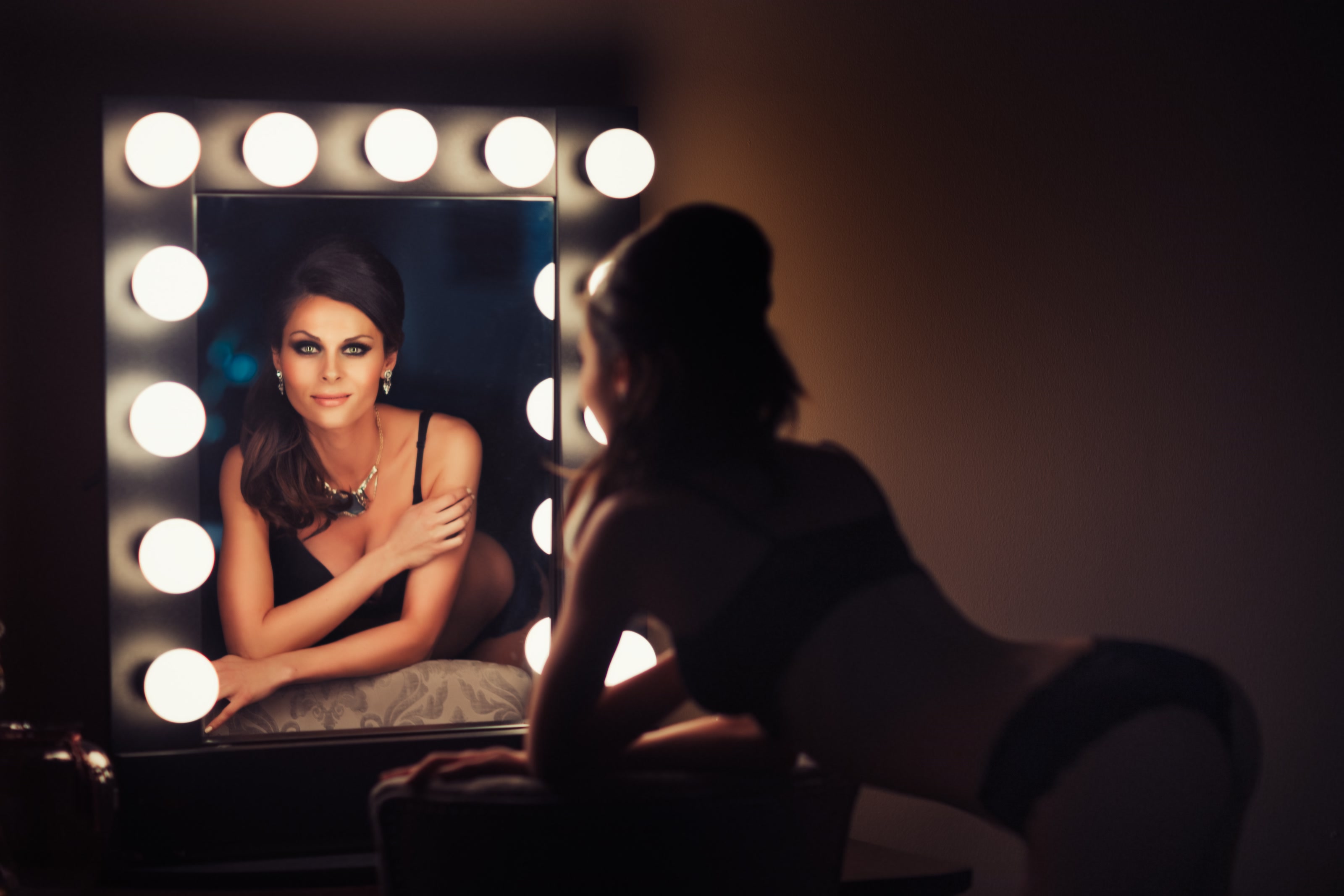
This is the question almost nobody asks out loud. It comes up in the third or fourth message of an inquiry thread, usually softened with an apology, and it is always some version of the same thing. How much do I actually have to take off. The reason it gets asked late is that most people assume there is a required answer and they are about to find out they do not measure up to it. There is no required answer. You decide, you decide in advance, and you can change your mind in the middle of the session. That is the whole policy. The rest of this post explains what the options actually look like, so you can picture yourself in one before you ever walk into the McKinney studio.
You set the line, not the photographer
The most useful thing to understand is that coverage is a client decision that we plan around, not a photographer decision you have to negotiate with. Before a session we talk about what you are comfortable showing, and that conversation happens while you are fully dressed, sitting down, with nothing happening yet. You tell us where your line is. We build the wardrobe order, the posing, and the lighting to sit inside it.
Nobody at a session is going to push you past what you agreed to. There is no moment where someone suggests you try one more thing without the robe. If you say lingerie only, the shoot is lingerie only, and we get you a full gallery inside that. The direction adapts to the line you drew. It does not test it.
The other half of that promise is the reverse. If you get an hour in and feel bolder than you did when you filled out the form, that is allowed too. It happens constantly. Just say so.
The four levels, in plain terms
Coverage tends to sort itself into four rough bands. Most clients land in the first two.
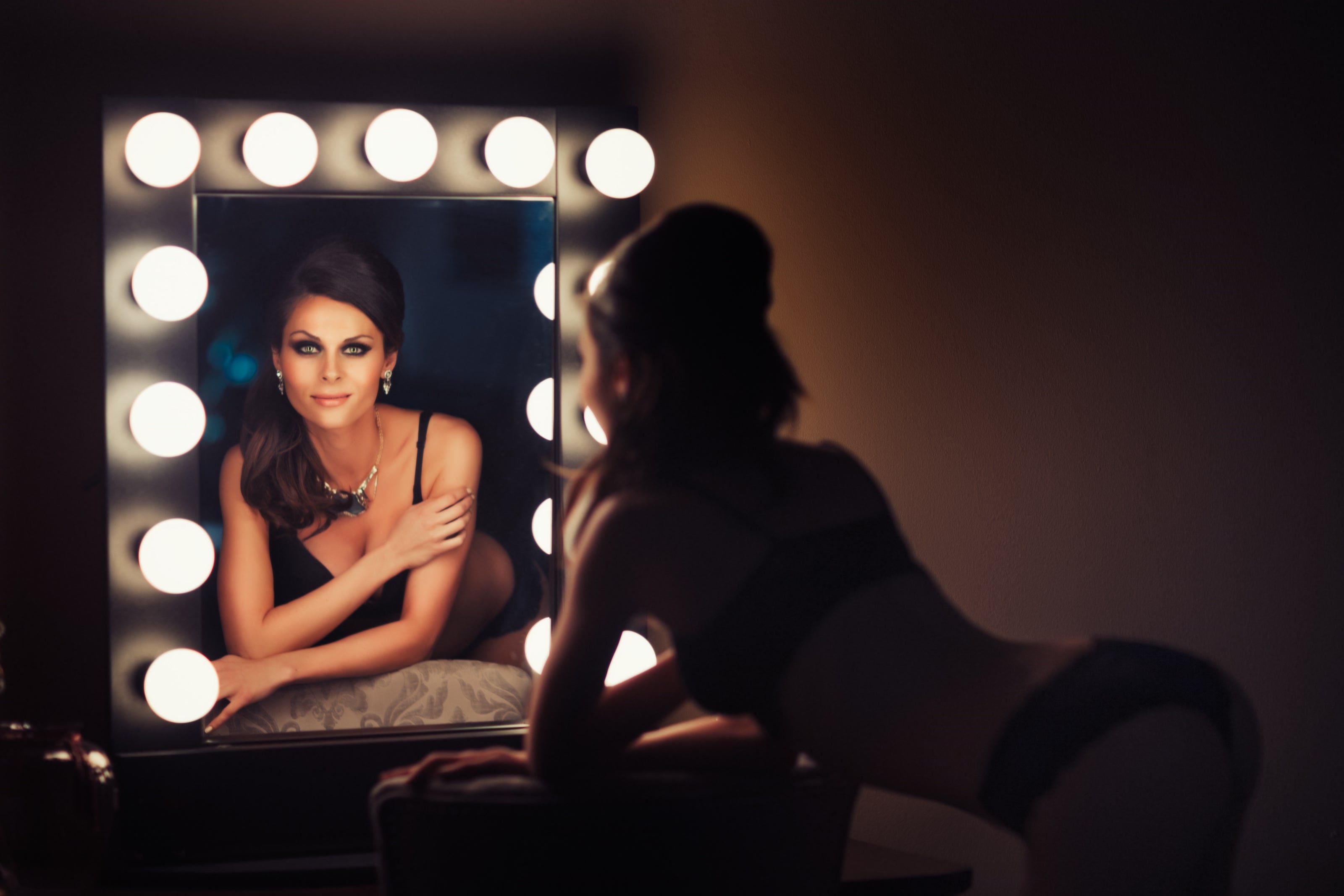
Fully clothed. A slip dress, an oversized button-down, a sweater and nothing else, jeans and a bralette. This reads as portraiture with an intimate mood rather than lingerie work, and it photographs beautifully. Plenty of glamour and personal-portrait sessions never go past this at all.
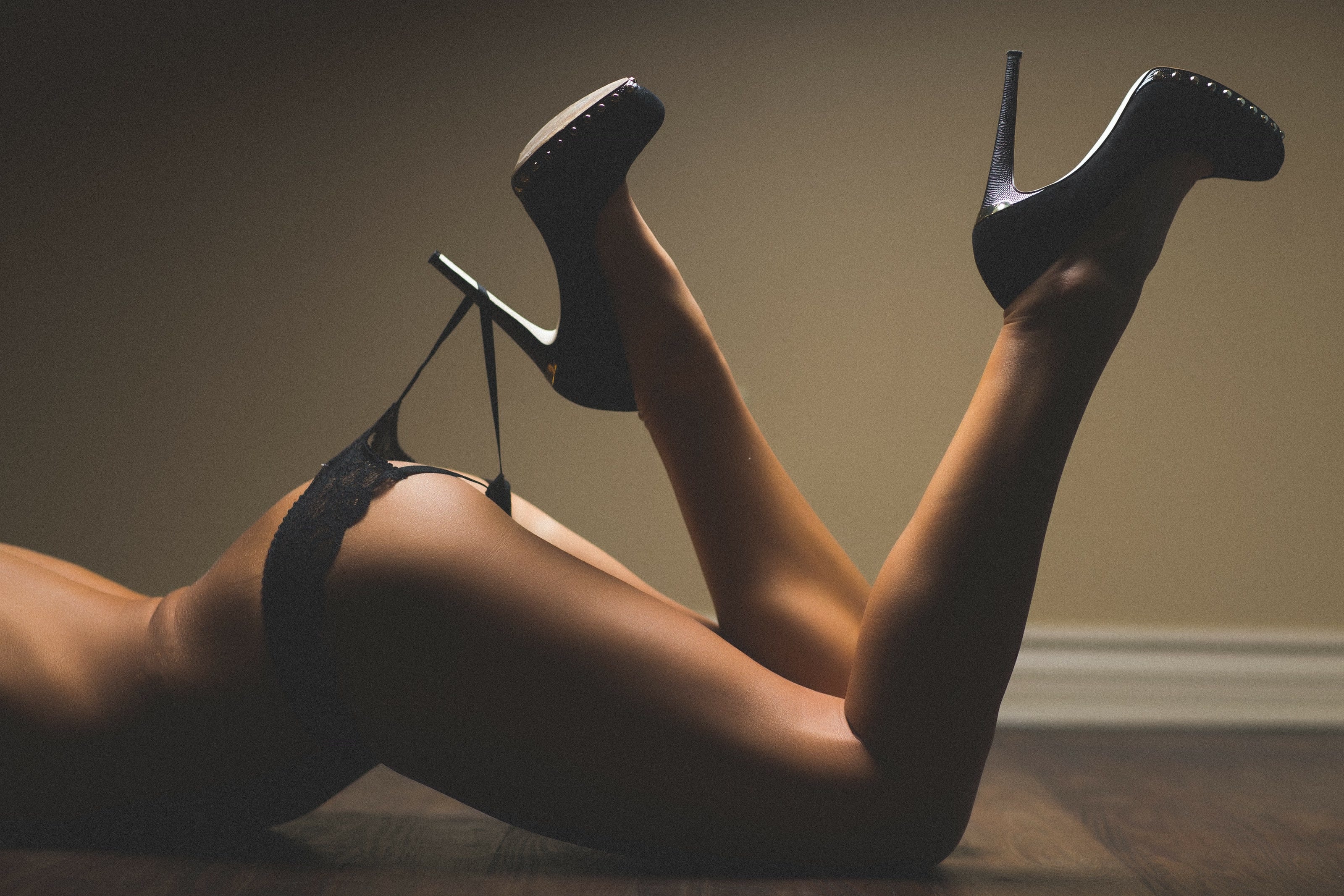
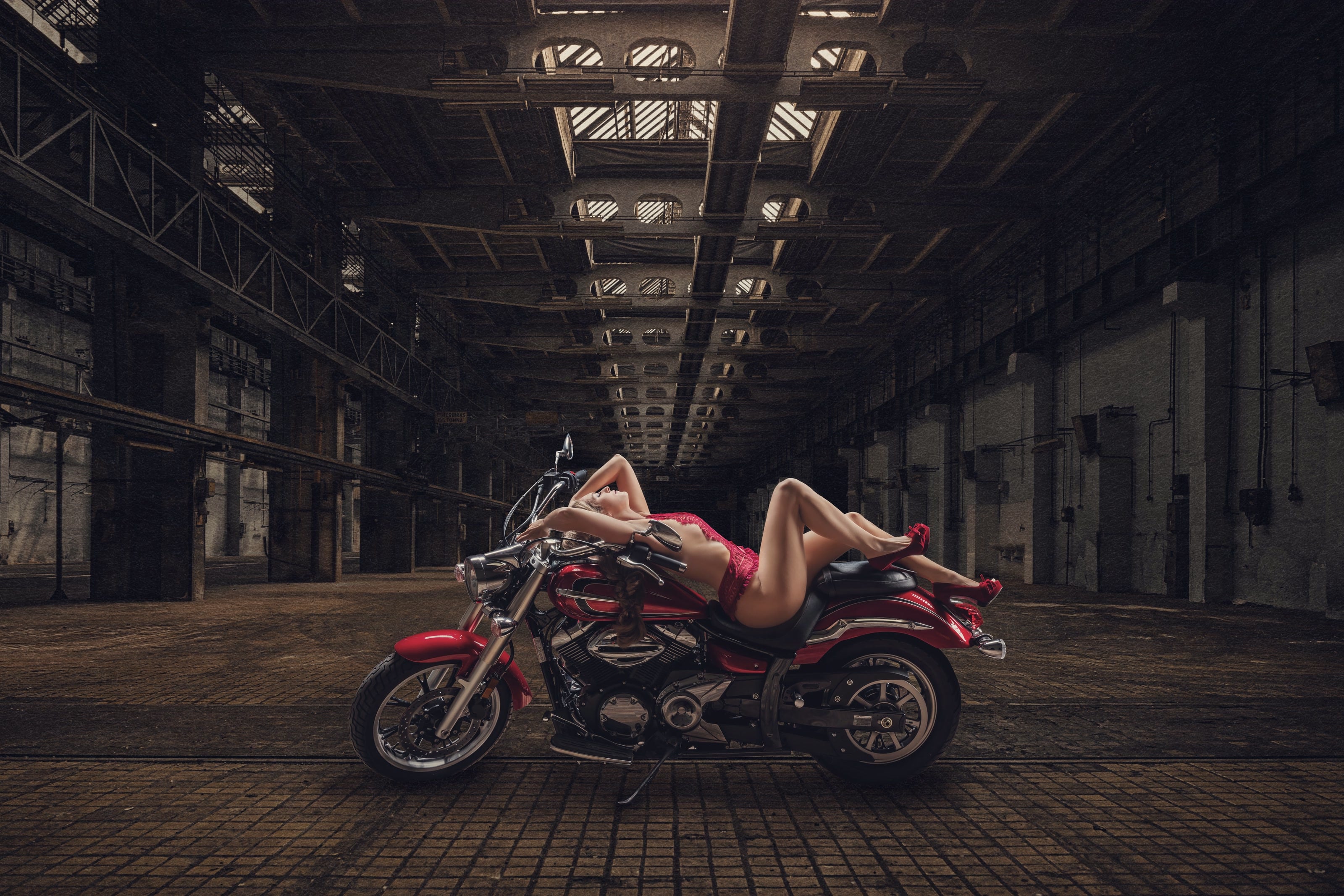
Lingerie. The default, and where the large majority of sessions live. A bra and bottoms, a bodysuit, a corset, a garter set. Coverage here is genuinely no more revealing than a swimsuit, which is worth saying plainly, because the mental image people arrive with is usually more extreme than the reality. This is the core of a classic boudoir session.
Implied. Nothing critical is covered by fabric, but nothing critical is visible either. It is done with a sheet, a turned back, a raised knee, an arm, a shadow, the edge of a frame. Implied work is where a lot of the most striking fine art boudoir images come from, precisely because it is built on shape and light rather than on what is exposed. Many clients who were certain they wanted lingerie only end the day asking to try two or three implied frames, because by then it stops feeling like a big step.
Nude. Available, chosen by a minority of clients, and treated as ordinary rather than as a big event when it is chosen. It is fine-art work, lit and posed the same careful way as everything else.
You are not required to move up the list. There is no progression you are supposed to complete. A session that stays in lingerie the entire time is a complete session, not a partial one.
Why the images look better than the coverage suggests
Here is the part that surprises people. The images clients love most are usually not the most revealing ones. That holds across almost every session we shoot.
What makes a boudoir photograph work is light, line, and expression. A back with the light raking across it, a jaw at the right angle, hands that are doing something instead of hovering. None of that depends on how much skin is in the frame. A woman in an oversized shirt with good light coming across her collarbone will out-photograph a technically more revealing frame with flat lighting every time.
That is why the coverage question matters less than it feels like it does. You are not trading modesty against quality. Some of the strongest work in the portfolio is the most covered.
The parts you are worried about
Almost everyone has a specific thing. A scar, a C-section shelf, a tattoo they want in or out of frame, a stomach they hold differently than they used to, one arm they hate in every photo they have ever seen of themselves. Say it before we shoot. It is not awkward on our end and it is not new information about human bodies.
Naming it gives us something to actually work with. Posing, angle, and light can handle nearly all of it, and handling it deliberately is far better than hoping it stays out of frame. The clients who tell us the one thing they are worried about are consistently the happiest at the reveal, because that thing got managed on purpose instead of by luck.
Wardrobe follows the decision
Once you know your coverage level, wardrobe gets much easier, which is why we settle coverage first. If you are staying clothed or in lingerie, you are packing three to five pieces that fit properly and that you can actually move in. Fit matters more than price or newness, and a well-fitting simple set beats an expensive one that gapes. Our guide on what to wear to a boudoir session goes deeper on fabrics, colors, and what tends to photograph well.
If you plan to include implied work, bring a sheet you like or trust ours, and consider a robe or an oversized shirt for the transitions between setups. The bridal clients often build the whole day around a coverage arc, starting in the veil and a shirt and ending somewhere more intimate.
How it works on the day
The order of the day does a lot of the work here. Hair and makeup is available as an option and runs first, then we start with the most covered look and move down from there if you want to. That sequencing is deliberate. By the time you reach the setup you were nervous about, you have already been photographed for an hour, you have seen a few frames on the back of the camera, and you are not the same person who walked in worried about it. You are directed through every pose, so you are never standing there deciding what to do with your hands.
The studio itself is closed and private during your session, the team is all female, and nothing is happening in a shared space. If the question underneath the coverage question is really about where the photos go and who can see them, that is a separate and equally fair thing to ask, and we cover it in detail in our post on privacy and image release. Nothing is published without your written say-so.
For a broader picture of the nerves side of a first session, our post on what a first boudoir session actually feels like walks through the arrival, and the experience page maps the whole day from the door to the reveal. Session and product pricing lives on the investment page, and if you are still comparing studios around the metroplex, the Dallas boudoir photographer hub pulls the local details together.
If you have a coverage question you would rather ask privately before booking anything, that is a completely normal first message. Send us an inquiry and ask it directly. We will give you a straight answer, and nothing has to be decided in that first exchange.