August 5, 2026
How much do you retouch? Boudoir editing and retouching in Dallas, explained
What actually happens to your images after a Dallas boudoir session: what gets retouched, what stays, and where you get a say in the final files.
By Jennifer Marilyn
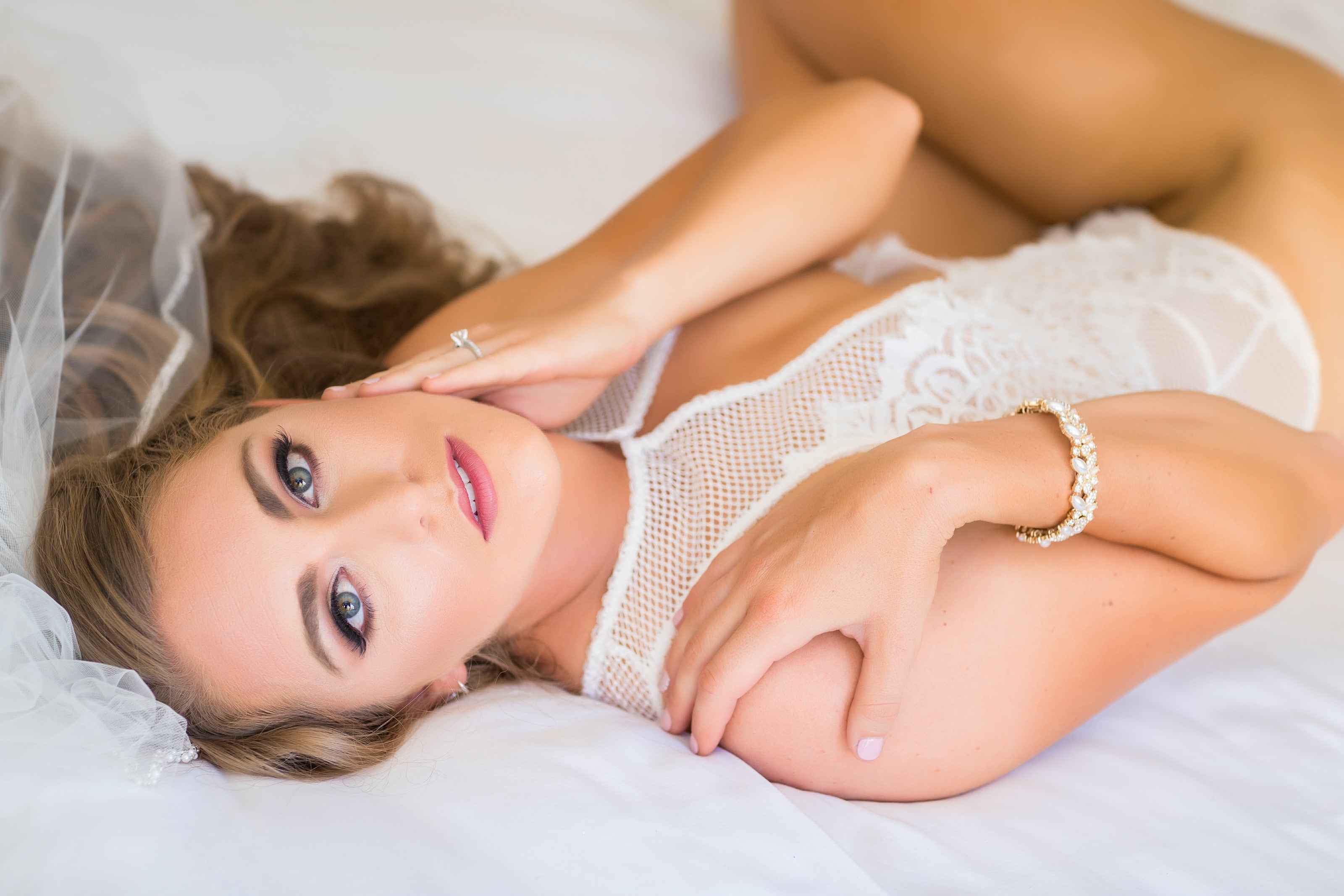
Almost every woman who books a session eventually asks some version of the same question, usually near the end of the consultation, usually a little quietly. How much do you edit these?
Underneath the question is a real fear, and it runs in two directions at once. One version worries the images will be barely touched, that every mark and shadow will be sitting there in print at twenty by thirty inches. The other version worries the opposite, that the retouching will go so far she will not recognize the woman in the frame. Both fears are reasonable. Neither one gets talked about honestly very often.
So here is the actual answer, in plain terms, about what happens to your files after you leave the McKinney studio.
What retouching actually means
Retouching is not one thing. It is a stack of decisions, and lumping them together is what makes the whole subject confusing.
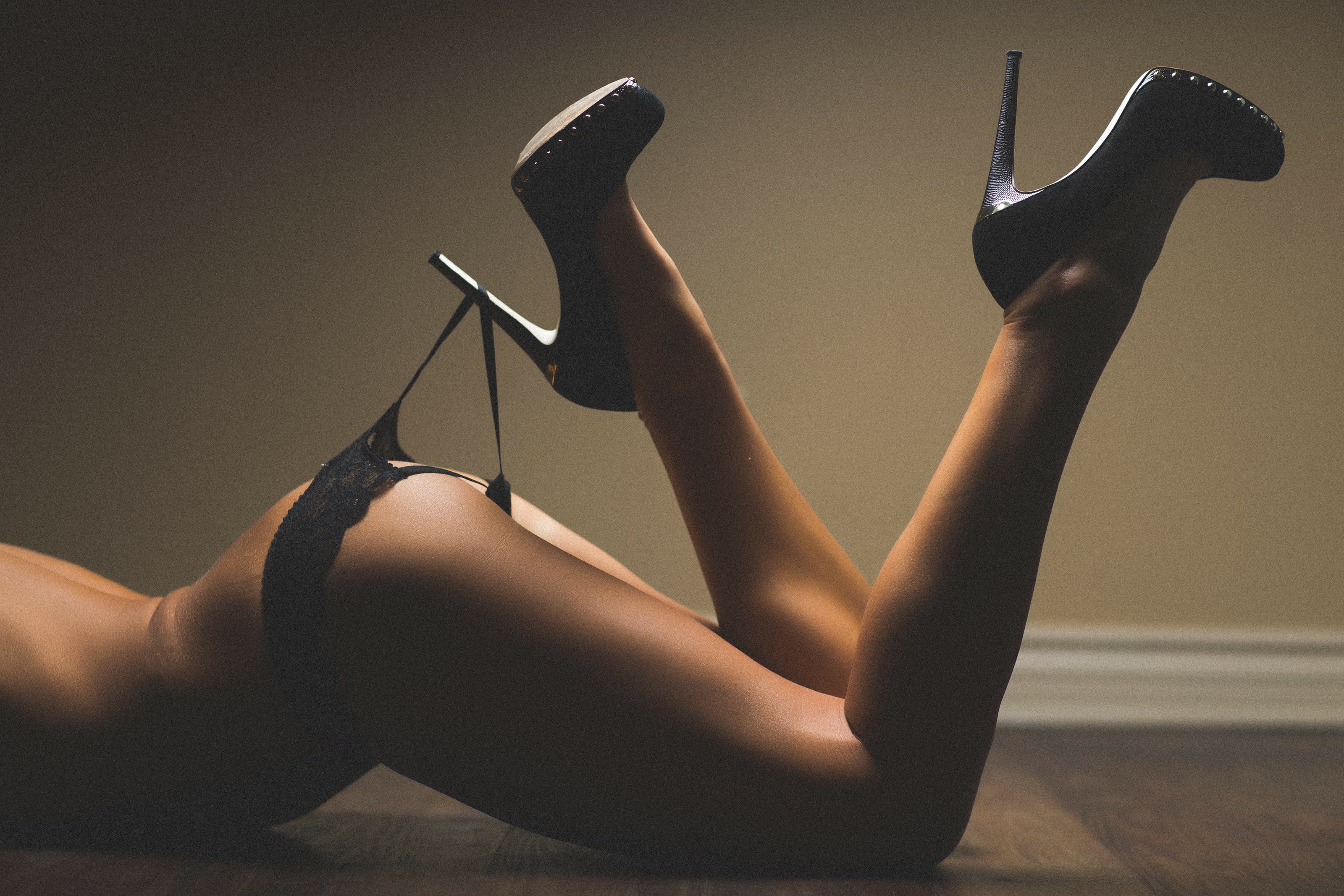
The first layer is the part that is not really retouching at all. It is developing the raw file. Every professional camera produces a flat, neutral file that has to be interpreted, the way a negative had to be printed. Exposure, contrast, white balance, the depth of the blacks, the warmth of the skin, the way the highlights roll off. That work happens on every single image, and it is where most of the finished look of a fine art boudoir frame actually comes from. It is craft, not correction.
The second layer is the cleanup. Temporary things that were on your skin the day of the session and will not be there in a month. A blemish. A scratch. A bug bite from a Texas backyard in July. A strap mark, a red patch from a waistband, a smudge in the liner. Lint on the sheets. A bit of tape showing at the edge of a bodysuit.
The third layer is the part people mean when they say Photoshopped. Changing the shape of a body. Slimming a waist, lengthening a leg, erasing a scar, smoothing skin until it reads like plastic. That layer is where the philosophy actually lives, and it is where we are deliberate.
What always gets done
Every image you receive has been developed and cleaned. That is the baseline, not an upgrade.
We remove the temporary and the accidental. If it was not part of you last month and will not be part of you next month, it goes. If it is a distraction that has nothing to do with you, a wrinkle in the backdrop, a stray hair across your cheek, a cord in the corner of the frame, it goes.
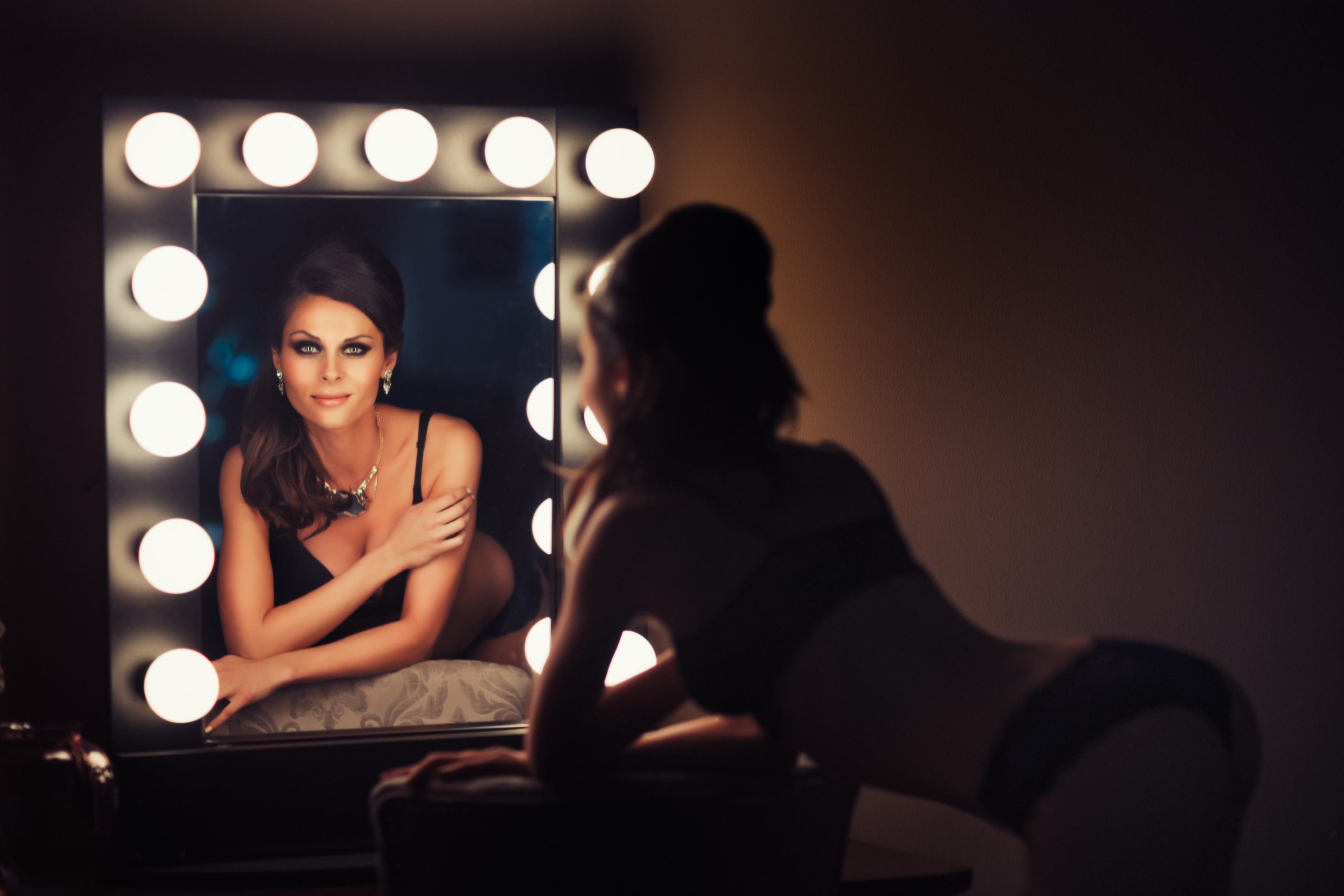
We also finish the light. Boudoir lives or dies on how skin renders, and a lot of what looks like heavy retouching in a good image is actually careful lighting done in the room, then carried through in the edit rather than invented in it.
What does not get done by default
We do not reshape bodies as a matter of course. We do not narrow waists, we do not lift or resize anything, and we do not run skin through a blur that erases texture. Skin that has no pores in it stops reading as skin, and the eye catches that immediately even when it cannot name what is wrong.
The reason is not moral posturing. It is that the images have to survive being looked at for a long time. A woman who buys an album is going to open it in five years. If the woman in the album is not quite her, the album quietly stops being hers. Every reveal we have ever done confirms this. The frames that land hardest, the ones that produce the long pause, are almost never the most manipulated ones.
Scars, stretch marks, and the things you are worried about
This is the conversation worth having out loud, and it is worth having before the session rather than after.
Some clients want a c-section scar left exactly as it is, because it is the whole point of the session. Some want it softened. Some want it gone. All three are legitimate, and none of them require an explanation. The same is true of stretch marks, surgical scars, a mastectomy scar, cellulite, a birthmark, the loose skin that comes after significant weight loss.
What we ask is that you tell us. Not in a long confessional, just a sentence during your pre-session call, or a note when you see the images. Leave this, soften that. We will follow it. What we will not do is decide unilaterally that something about your body is a flaw and quietly remove it. Deleting something you were proud of is a worse mistake than leaving something you wanted gone, because the second one is fixable and the first one is a judgment you never asked for.
Tattoos follow the same rule with one addition. Tattoos photograph beautifully and we light for them intentionally, so if you have work you want featured, say so and we will build poses around it rather than around it being incidental.
Where you actually get a say
You get a say twice.
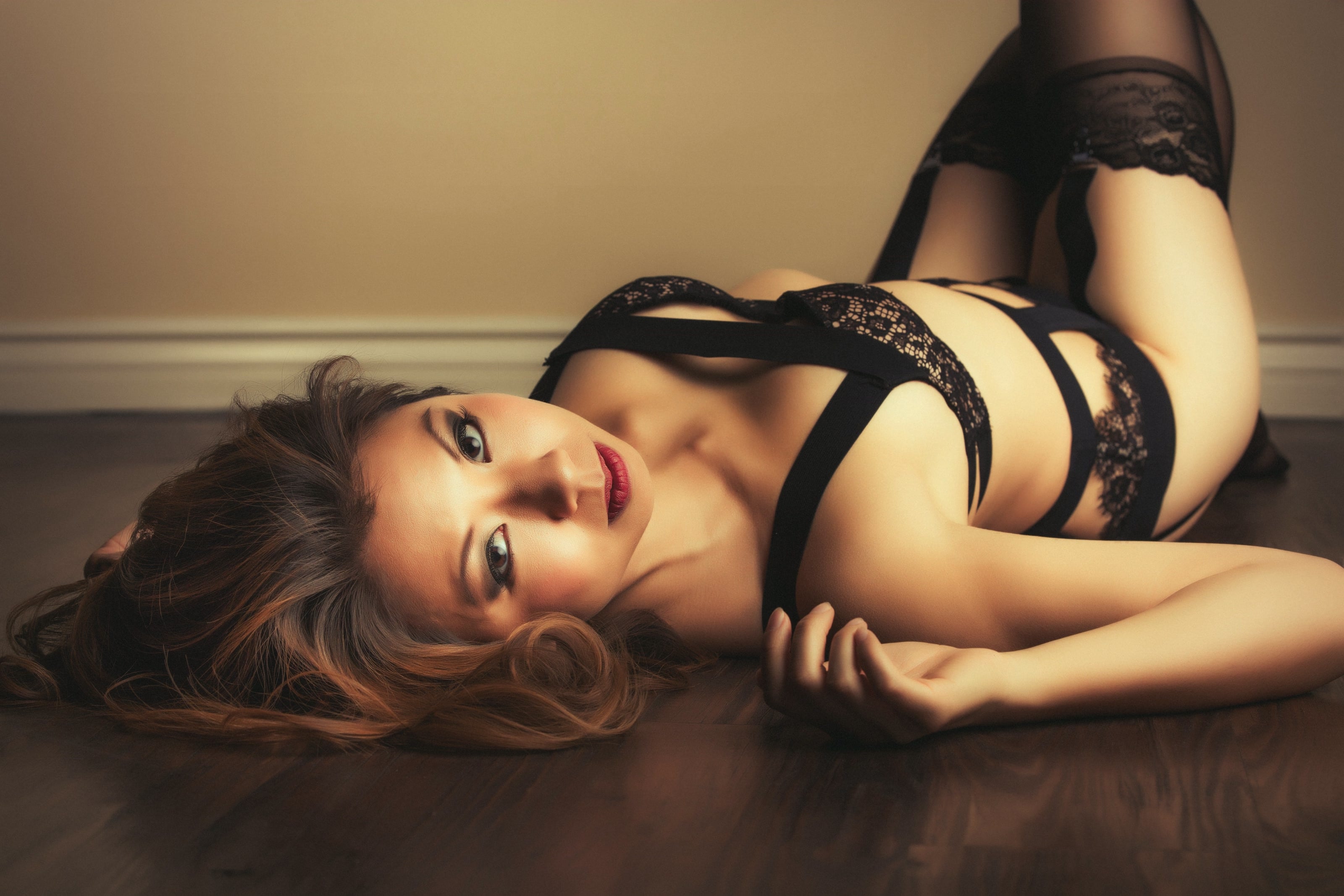
Before the session, at your consultation, where you can flag anything you want handled a particular way. This is also where we talk through wardrobe, coverage, and what kind of session you are actually after, because a classic boudoir session and a fine art boudoir session are edited toward different ends. Fine art work leans more sculptural, with deeper contrast and more attention to shape and shadow. Classic work stays closer to natural skin and a softer, warmer finish.
And again at the reveal, when you see the gallery for the first time and choose what you are ordering. Anything you select for an album or for wall art gets a final, more detailed retouch pass before it is printed. That is the point at which specific requests get applied, because there is no sense doing intensive work on frames that are never going to leave the gallery. The full sequence from session day to finished product is laid out in our post on the reveal and delivery timeline, and the experience page walks through the session day itself.
A word on filters, apps, and AI
We do not run your images through a one-click app, and we do not generate anything. What comes back to you is a photograph of you, taken in a room in McKinney, on a day you were there, finished by hand.
That matters more now than it did five years ago. Anyone can produce a smooth, symmetrical, plausible-looking image on a phone in four seconds. What is genuinely hard, and what people can still tell apart instantly, is a real photograph of a real person made well. That is the thing worth paying a professional for, and it is the reason we work the way we do.
The short version
Everything gets developed and cleaned. Nothing gets reshaped unless you ask. You are told what we do before we do it, and you have the final word on the images you keep. Costs for products and digital files are all on the investment page, and professional hair and makeup is available as an option if you want the full glam day.
If you have been sitting on the idea of a session and the retouching question was the thing holding you up, that is a good sign. It usually means you are taking the pictures seriously, which is exactly the right way to walk in. Most first-timers are more nervous about the day itself, something we get into in our post on first-session nerves.
We photograph women from across DFW at the McKinney studio, and you can see the full range of what that looks like on our Dallas boudoir photographer page. When you are ready to talk through your own session, send us an inquiry and we will start with the consultation.