September 17, 2026
Should you bring an inspiration board to your boudoir session? How saved images actually help
How to build a boudoir inspiration board before a Dallas session, what your saved images tell us, and the one thing a Pinterest board cannot do for you.
By Jennifer Marilyn
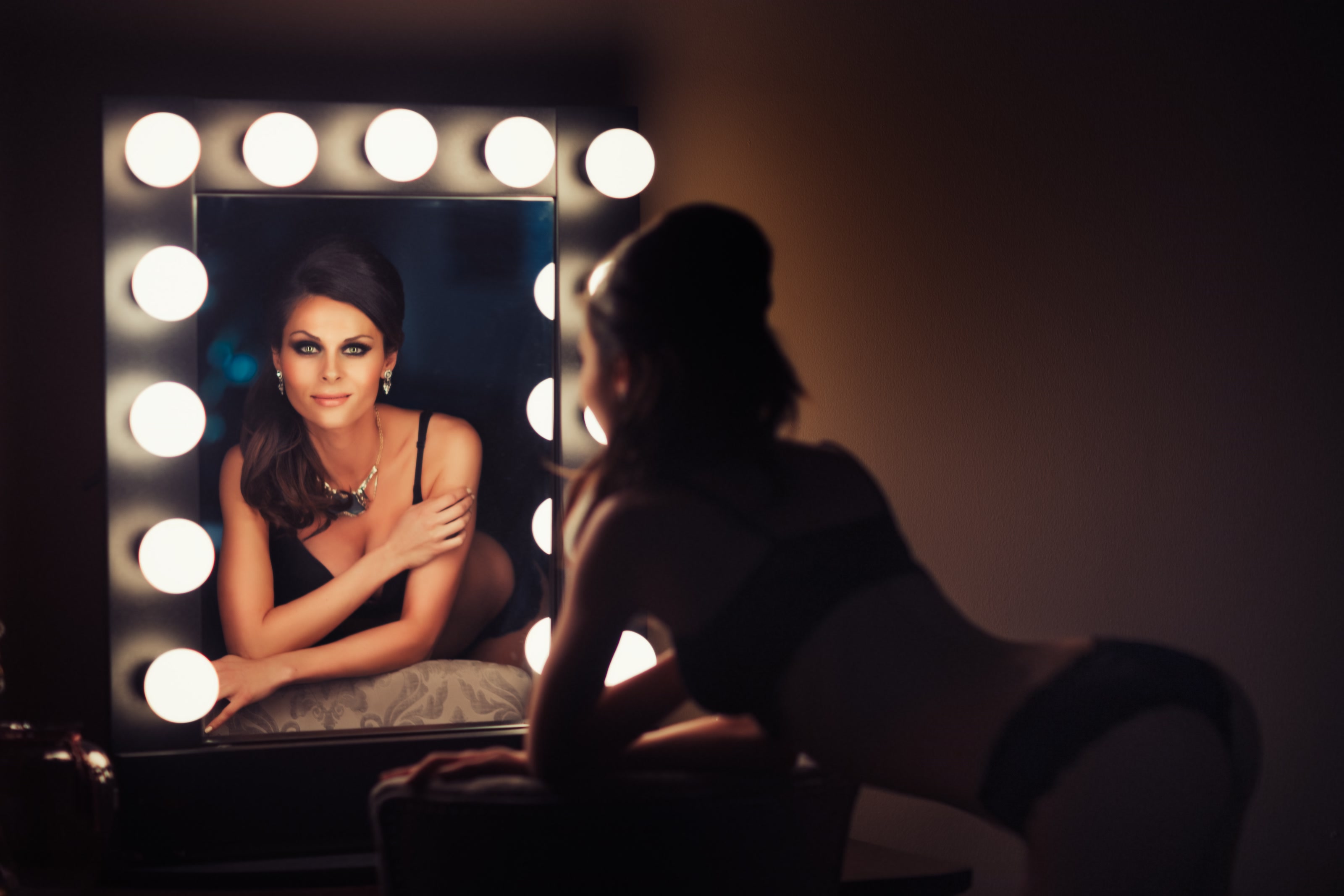
Almost every woman who books a Dallas boudoir session has a folder of saved images somewhere. A Pinterest board she started two years ago and never told anyone about. A dozen screenshots buried in her camera roll. An Instagram collection she adds to at eleven at night and never opens in daylight. Then the consultation comes around and she hesitates, because sending it feels like handing a stranger a page out of a diary.
Send it anyway. That folder is the single most useful thing you can give us before your session, and it is useful for reasons that have very little to do with copying the pictures in it.
Why we ask for your saved images
When you describe what you want out loud, you are limited by vocabulary. Most people have not spent years talking about photographs, so the words available are broad ones. Classic. Moody. Natural. Elegant. Those words mean four different things to four different people, and if we build a session on them we are guessing.
Images skip the vocabulary problem entirely. Twenty pictures you saved without overthinking tell us more in ninety seconds than an hour of careful description would. They are a record of what your eye keeps returning to, made before you started trying to explain yourself.
That is why the consultation usually opens with the board rather than the calendar. We are not looking for a shot list. We are looking for the pattern underneath one.
What we are actually reading in it
Here is what we pull out of a board, and none of it is the specific pose.
Light. This is the big one. Boards tend to sort themselves cleanly into bright and airy, or dark and shaped. Hard window light with real shadow is a completely different session than soft, even, low-contrast light, and almost nobody names this preference out loud. The board names it for you every time.
Color, or the absence of it. If two thirds of what you saved is black and white, that is a decision you have already made without realizing it. Same if everything you saved is warm, or everything is desaturated and cool.
Distance. Some women save nothing but close crops. Hands, collarbone, the edge of a jaw, fabric. Others save full-length frames of the whole room. That tells us how much of you wants to be in the picture, which is a more delicate question than it sounds and one you should not have to answer in words.
Wardrobe weight. Structured and tailored, or soft and draped. A board full of sharp lines and a board full of loose linen are pointing at two different wardrobes, which is worth knowing before you start packing. Our guide on what to wear to a boudoir session goes deeper once the direction is set.
Mood. Whether the women in your saved images are looking into the lens or away from it. Whether they look amused, still, guarded, or caught mid-motion. That is tone, and tone drives everything about how a session is directed.
The board is a direction, not a shot list
This is the part worth being honest about. We are not going to recreate the photographs you saved, and you should not want us to.
Those images were made with a different room, different windows, a different body, a different face, and a stranger's proportions. A pose that works beautifully on one person can be actively unflattering on another, and a frame built for a loft with a twelve foot window cannot be rebuilt in a room that does not have one. Chasing a copy means spending your session failing to match something instead of making something.
What we do instead is read the direction and then build for the room and the person in front of us. Your session happens in our McKinney studio, with light we know at every hour of the day, and the version of your board that we shoot will look like it belongs to you rather than to the woman in the original frame.
Nearly always, the images clients love most at the reveal are not the ones from the board. They are the ones that came out of the same direction, taken in a room built for them.
Where boards go sideways
A few patterns cause trouble, and they are worth naming.
A board that is entirely one pose. Fifty variations of the same shot narrows the session before it starts. Save the frames you love even when they are nothing alike. Contradiction is fine. We would rather see the range and pick.
A board built out of what you think you should like. Some women send a board assembled for an imagined audience rather than for themselves, and it reads as flat and generic the moment you look at it as a group. The useful board is the private one you already had.
A board that is really about a body, not a photograph. This one matters. If everything saved is of women who look nothing like you, a board can quietly become a comparison exercise, and comparison is the fastest way to walk into a session braced and self-conscious. If your folder has drifted that way, keep the images you love for how they were made and let the rest go.
No board at all. Also completely fine. Plenty of women arrive with nothing saved, and we build from conversation and from the portfolio instead, pointing at what works and what does not. You are not behind if you have never made one.
Building one, in about twenty minutes
If you want to put something together before your consultation, keep it fast and unfiltered.
Save twenty to thirty images without editing yourself. Do not stop to justify any of them. Go through your existing camera roll screenshots first, because the things you saved months ago are more honest than the things you pick on purpose today. Include two or three you are drawn to but cannot explain, since those are usually the most revealing. Then stop. A board of two hundred images has stopped being a preference and started being a survey.
Then send the whole thing. You do not need to organize it, caption it, or apologize for it.
What the board cannot do
An inspiration board sets direction. It cannot make you comfortable, and it is not a substitute for being directed well on the day. Nobody arrives knowing how to stand, and nobody is expected to, which is why posing and direction are our job rather than your homework. The board handles the look. The session itself handles the rest, and you can read how the day runs start to finish on the experience page.
It also does not decide the shape of your session. Whether a classic or fine art approach fits what you saved is a conversation we have with you, and professional hair and makeup is available if you want it. Current pricing for every session type lives on the investment page.
Bring the folder you already have, even the messy version, especially the messy version. If you are ready to start, send us an inquiry and bring your saved images to the consultation. We will build the rest around them.