August 26, 2026
Boudoir with tattoos: how ink gets lit, posed, and left alone
Booking a Dallas boudoir session with tattoos? How ink behaves under studio light, wardrobe that frames it, posing for a back piece or sleeve, and what we never retouch.
By Jennifer Marilyn
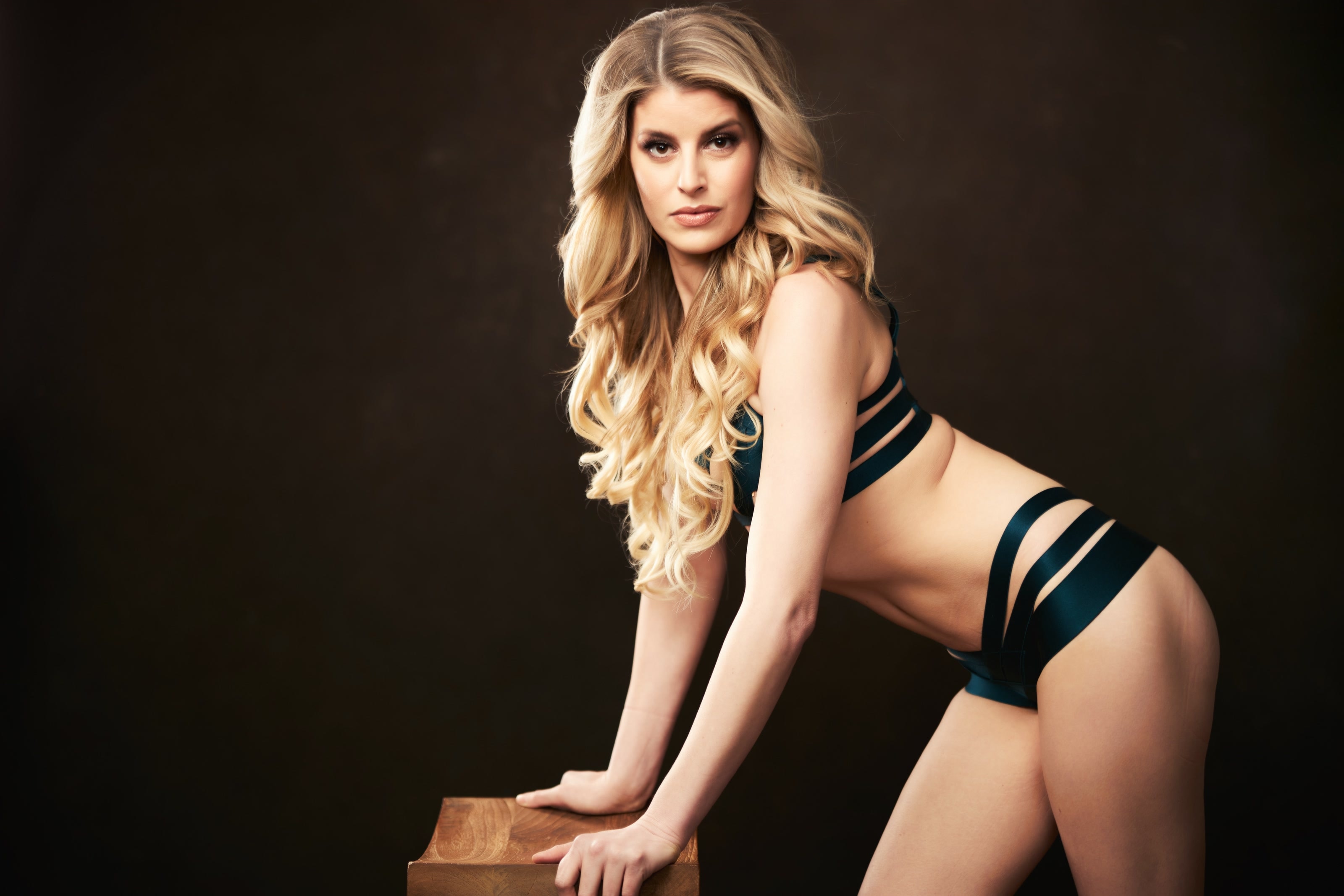
A woman emailed us last spring with a full back piece, six years in the making, and one question underneath everything else she wrote: would we edit it out?
She had been to a portrait session somewhere else and been handed back images where the ink was softened, dulled, and in two frames removed entirely. Nobody asked her first.
That is the fear worth naming before anything else. Women with tattoos who search for a boudoir photographer in Dallas are usually not asking whether tattoos are allowed. They are asking whether the person behind the camera is going to treat the work on their body as a flaw to be managed. So let me answer it plainly. We do not remove tattoos. We do not desaturate them, blur them, or pose around them like they are a problem. We light for them.
Ink is a compositional element, not an obstacle
Here is the practical way to think about it. A boudoir frame is built out of a few things: the shape of the body, the fall of light, the line of fabric, and the direction of the eye. A tattoo is one more line in that composition, and usually the strongest one in the frame.
That changes how a good session gets planned. A rib panel pulls the eye across the torso horizontally. A spine piece runs the eye vertically and rewards a long, tall frame. A sleeve terminates at the wrist, which means the hands suddenly matter more than they would otherwise, and where you put them becomes a real decision instead of an afterthought.
None of that is harder to shoot. It is just deliberate. When we talk through a session on the experience page we are describing the same process for everyone, but with heavily tattooed clients we spend more of the pre-session conversation on placement, because placement determines the shot list.
How tattoos actually behave under studio light
This is the part almost nobody explains, and it is the reason some tattoo photos look flat and muddy while others look like the ink is sitting on top of the skin.
Dark blackwork absorbs light. A solid black panel will read as a dark hole in the frame if you light it the same way you would light bare skin. It needs either more light directly on it or a light placed to skim across the skin so the texture underneath still reads. In our classic boudoir sessions this usually means moving the key light closer and feathering the edge of it across the tattooed area rather than blasting it straight on.
Color ink shifts under warm light. Reds and oranges bloom, blues and greens go slightly gray. That is not a reason to avoid warm light. It is a reason to know it is happening and to decide whether you want a warmer, softer look or a cleaner one that keeps the ink closer to how it looks in daylight.
Healed ink and fresh ink photograph differently. Fresh work is still slightly raised, often shiny, sometimes surrounded by redness that a camera reads much more strongly than the eye does. Fully healed work sits flat and matte and takes light evenly.
Fine-line work is fragile in an image. Very thin single-needle tattoos can disappear at small sizes or under soft, flat light. If a fine-line piece is the reason you are booking, say so early, because it needs harder, more directional light to hold its detail.
Wardrobe that frames the ink instead of fighting it
Most of our wardrobe advice on the what to wear post applies to everyone. Two things are specific to tattoos.
The first is coverage. A high-neck bodysuit will cut a chest piece in half. A racerback will hide the top third of a back piece. That may be exactly what you want on some frames and exactly what you do not want on others, which is why we plan for both and shoot both. Bring the piece that covers and the piece that does not.
The second is contrast. Black lace over blackwork tends to merge into a single dark mass. Cream, bone, white, and skin-adjacent tones let heavy ink separate and read. That is not a rule, it is a tendency, and it is worth having at least one lighter piece in the bag if your tattoos are dense and dark.
If you want the ink to be the subject rather than the accent, the most honest version of that is usually the most minimal one. Our coverage levels post walks through how far that goes and where the line sits, and there is no pressure in either direction.
Posing when the tattoo is the point
Posing changes when there is a specific piece you want documented. Our general approach to posing and direction is that you are directed continuously and never left to figure it out. With a back piece or a large thigh panel, that direction gets more technical, because small rotations matter.
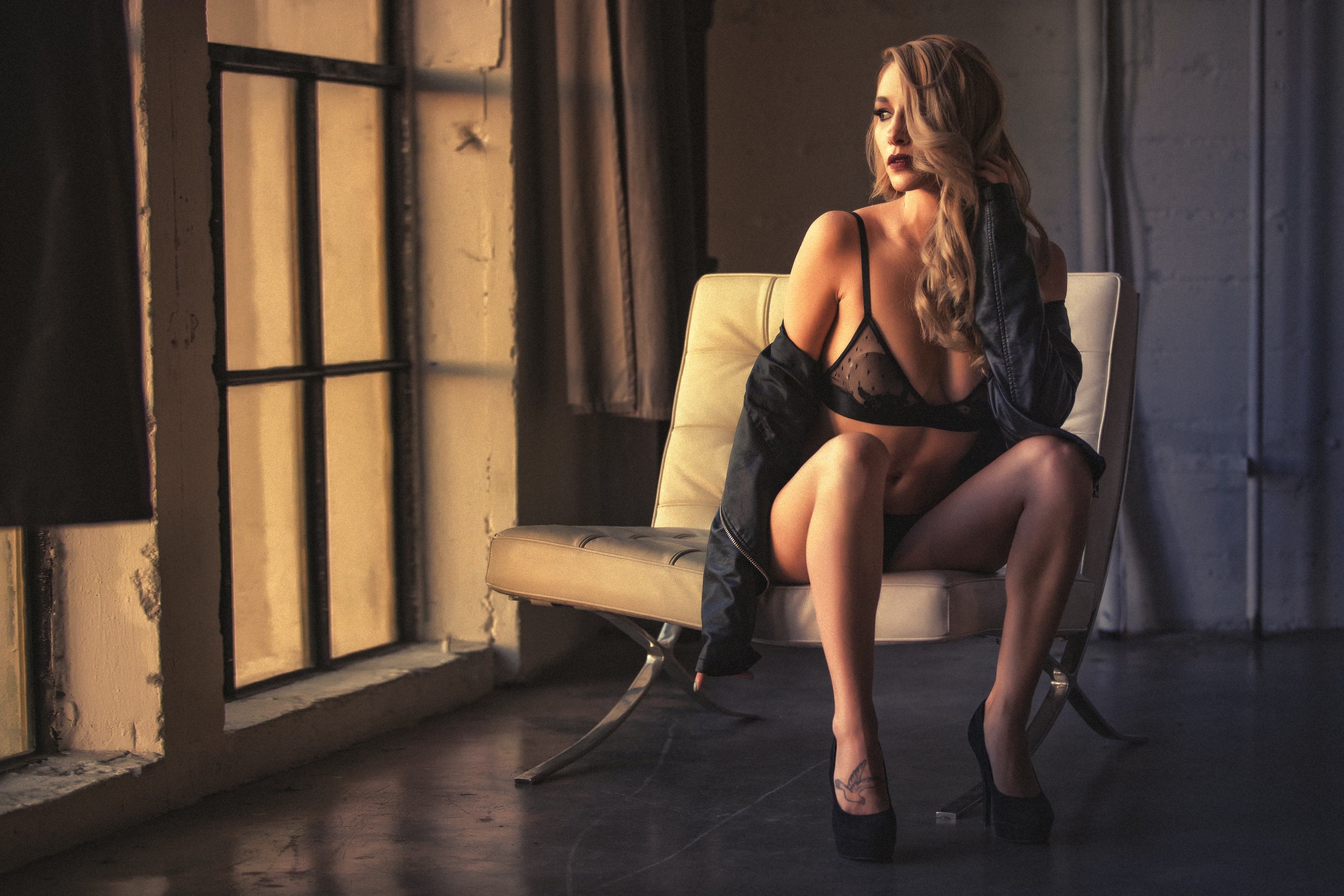
A back piece needs the shoulders squared or slightly rotated, not hunched, and it usually reads best with the hair swept off the neck. A rib or side panel wants a slight arch and a raised arm to open the ribcage. Thigh work reads best seated or reclined with the leg extended rather than compressed.
You do not need to know any of this. Naming which pieces matter most to you is the only preparation required. We will handle the rest, and we will show you the back of the camera as we go so you can see the ink reading the way you want it to before we move on.
What we retouch and what we never touch
Our full philosophy is in the retouching and editing post, and the short version holds here. We remove temporary things: a stray hair, a scratch from last week, a bra strap mark that will be gone in an hour. We do not remove permanent things that are part of you.
Tattoos are permanent things. So the standing rule is that ink is never removed, never lightened, and never smoothed into the skin. What we will do is correct color so it matches how it looks in the room, and clean up redness or shine on newly healed work if it is distracting.
If there is a specific tattoo you would rather not have in the final set, tell us and we will simply keep it out of frame or out of the selects. That is a composition decision made with you, not an edit made behind your back.
Fresh work, cover-ups, and ink over scars
If you are getting new work done before your session, give it time to heal fully. Most artists will tell you what that looks like for the placement and the style, and photographing before it is settled means shine, redness, and peeling that no edit fixes cleanly. Booking with a little runway solves it, and the how far in advance to book post covers our normal timeline.
Cover-ups and tattoos placed over surgical scars come up more than you might think, especially in post-mastectomy and post-surgical work. Those pieces are usually the entire reason a woman books, and they are photographed with exactly as much intention as anything else in the frame. The fine art boudoir approach, which leans more sculptural and more about form and light than lingerie, is often the right fit for that kind of session.
Booking a tattooed session in DFW
Our studio is in McKinney, an easy run up US 75 or the Dallas North Tollway from most of the metro, and it serves clients across the region. If you are working out which studio fits, the Dallas boudoir photographer page lays out how we work and who we work with. Session and product details, including current pricing, live on the investment page. Professional hair and makeup is available as an option.
If you have been putting this off because you were not sure your ink would be treated as art, that is the wrong reason to wait. Tell us what you have, what it means, and which piece you most want to see photographed properly. Send us an inquiry and we will build the session around it.