September 7, 2026
Stretch marks, scars, and cellulite: what a Dallas boudoir session actually does about them
Worried about how you will look? Here is what a Dallas boudoir session really does about stretch marks, scars, cellulite, and the marks you notice most.
By Jennifer Marilyn
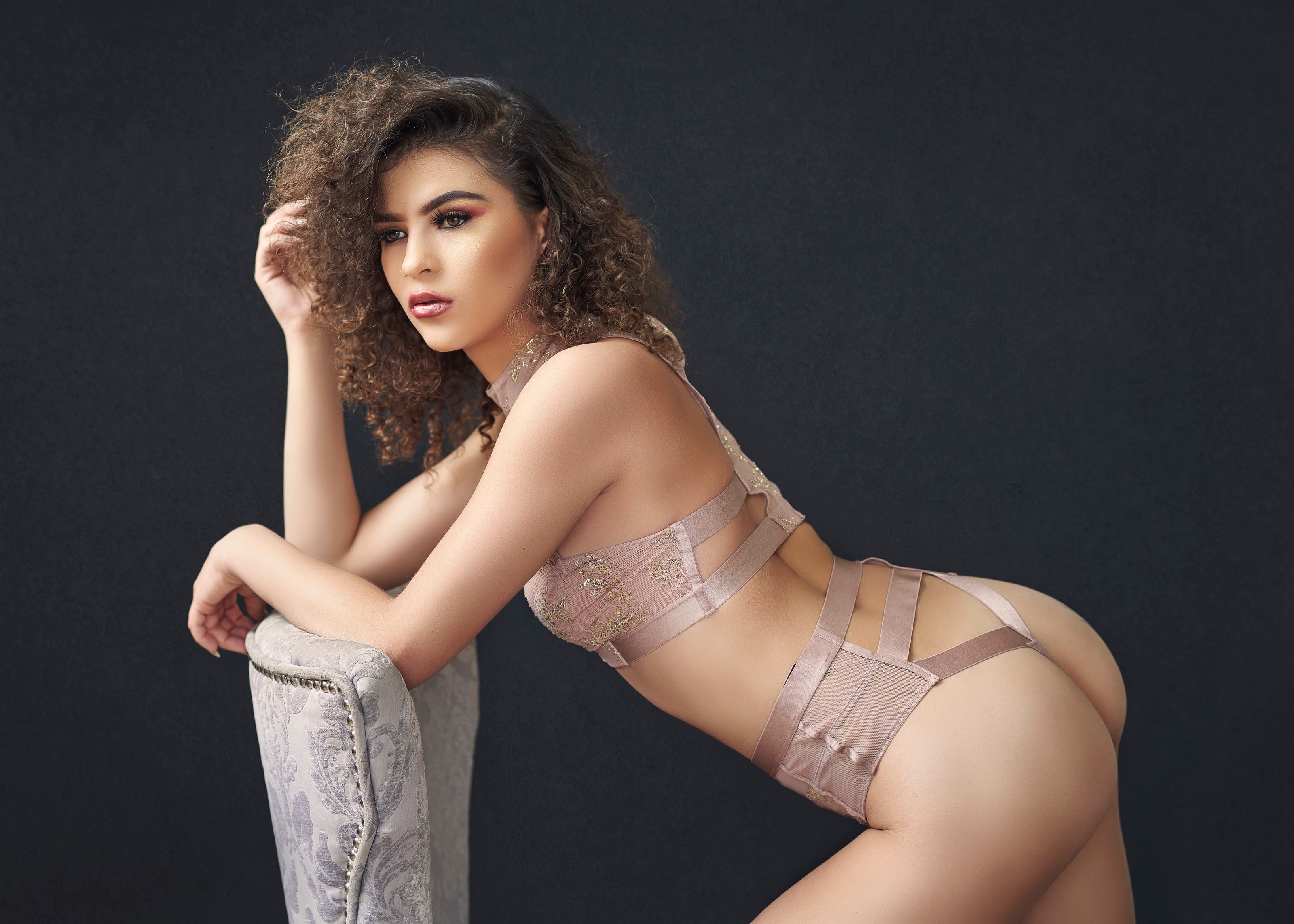
Almost every woman who inquires about boudoir stretch marks and the rest of it before she asks anything about dates or wardrobe. The message usually starts the same way: I want to do this, but I have stretch marks, or a scar from a surgery, or a stomach that does not look like it used to. The real question underneath is whether a Dallas boudoir session is going to make her feel worse about the exact things she already sees in the mirror. It is a fair question, and it deserves a straight answer instead of a slogan.
So here is the straight answer, from a studio that has photographed hundreds of bodies. The marks you are worried about are far less visible in a well-made photograph than they are in your bathroom mirror at the end of a long day. Not because we erase you, but because the things that make a mark look harsh in real life are the things a photographer controls: the light, the angle, the pose, and the distance. This post walks through what actually happens to stretch marks, scars, and cellulite in a session, and where retouching does and does not come in.
What a boudoir session does about stretch marks
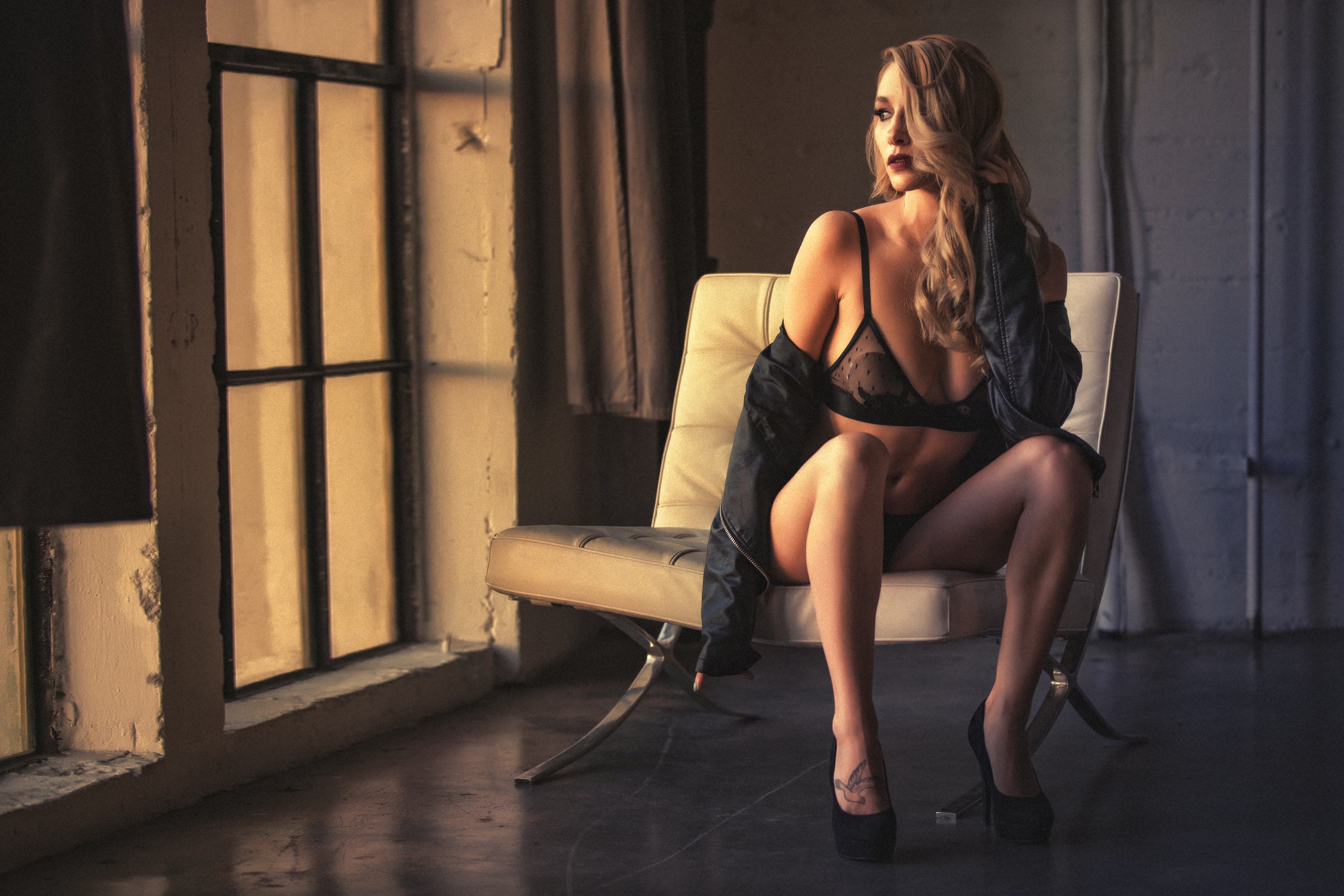
Stretch marks read as texture, and texture only shows up when light hits it from a hard, raking angle. That is why they look most obvious under overhead bathroom lighting or midday sun, which rakes across the skin and throws every ridge into relief. In the studio we do the opposite. Soft, directional light wrapped close to the body fills those ridges instead of carving them out, and the same skin that looked busy in a mirror goes quiet on camera.
Posing does the rest. Stretch marks along the hips, the lower stomach, and the backs of the thighs sit differently depending on whether you are standing flat, turned, seated, or lying down. Part of a photographer's job is knowing which position lengthens and settles the skin in a given area, so you are never left to guess. You will not be asked to hold yourself in some unnatural way to hide anything. You will be given clear, specific direction, which is the whole point of professional posing and direction. Most clients are surprised by how little the marks register once the light and the angle are doing their part.
Scars: surgical, C-section, and the ones with a story
Scars are their own category because they often carry meaning. A C-section scar, a mastectomy or reconstruction scar, a scar from surgery or an accident: these are not flaws to be tidied away, and we do not treat them that way by default. Some clients want their scar fully present in the frame because it is part of what the session is about. Others would rather it sit quietly. Both are valid, and you decide, not us.
The mechanics are the same as with any texture. A fresh scar that is still pink or raised catches light more than an older, flat one, so we light and angle to keep it from dominating. If you want it softened further in your final images, that is a retouching decision we make together, image by image. If you want it left exactly as it is, we leave it. There is no house rule that says a scar has to disappear. The fine art boudoir approach in particular tends to treat marks like these as part of the composition rather than something to fight.
Cellulite is a lighting problem, not a body problem
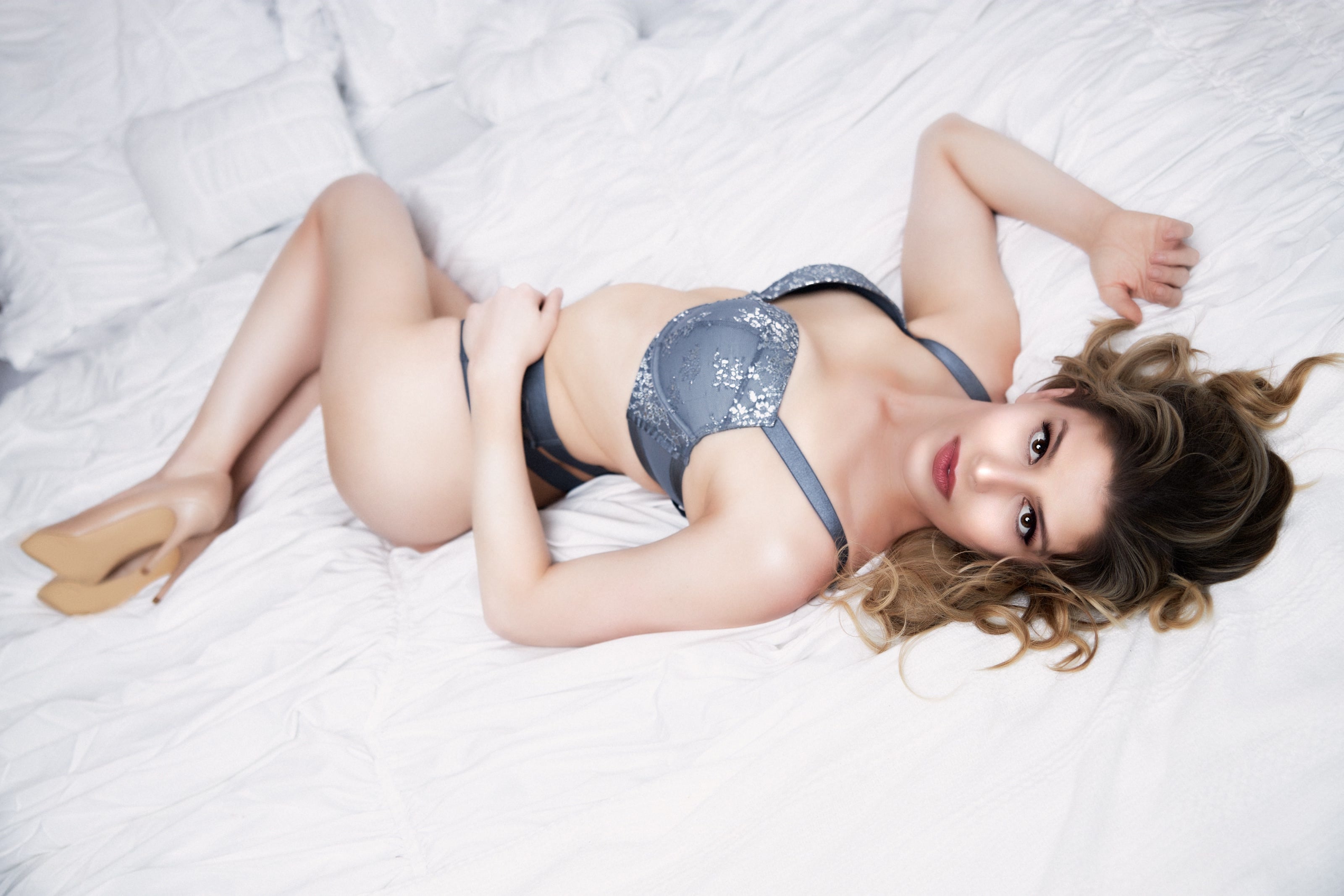
Nearly everyone has some, and it photographs the same way stretch marks do: it is texture, and texture is created by light. The dimpling you see on the backs of your thighs under a dressing room's downlights is that light raking across the surface. Change the light and you change what the camera records. Soft light from the right direction, combined with poses that keep the skin from bunching, means cellulite that feels loud to you in a mirror is usually a non-issue in the final frame. This is one of the most common reasons a client tells us the photos do not look like what she braced for.
Where retouching actually comes in
Retouching is real, and it is also more restrained than most people expect. Our editing philosophy is to keep you looking like yourself on your best real day, not to build a different person. That means we might soften a temporary blemish, calm a bit of redness, or ease a scar if you ask for it, while leaving the structure of your body, your skin, and your face intact. We do not narrow waists, lengthen legs, or smooth skin into plastic. If you want to understand exactly how far we take it, the full breakdown is in our post on boudoir editing and retouching.
The order matters, too. The goal is always to get the image right in camera first, through light and posing, so that retouching is a light final pass rather than a rescue mission. A photo that depends on heavy editing to look good tends to look edited. A photo lit and posed well from the start barely needs it.
The body you are bringing is the right one
A lot of women decide, quietly, that they will book once they lose the weight, or once the postpartum months settle, or once some future version of themselves shows up. That version rarely arrives on schedule, and the session keeps getting pushed. We wrote a whole piece on why waiting to lose weight usually does not change the photo the way people expect, and the same logic applies to marks and scars. The camera is not grading you against an ideal. It is recording a real person in good light.
If your worry is tied to a recent change in your body, from pregnancy, weight loss, or surgery, you are in very common company here. Sessions built around exactly those moments, whether that is after weight loss or postpartum or a body that has always been fuller than the images you see online, are some of the most rewarding ones we do. If you have read that you are simply not photogenic, know that most of what people call being un-photogenic is really just being un-directed.
What you can expect on the day
None of this is left to chance in the room. Before we shoot, we talk through what you like and what you would rather downplay, so nothing is a surprise. Professional hair and makeup is available as an option if you want it, and many clients find it settles the nerves to be fully camera-ready before the first frame. You can see how the whole day is paced in our experience walkthrough, and each of our classic boudoir sessions is built around real direction, not you fending for yourself.
You are also allowed to look at the back of the camera. Many clients ask to see the first few frames, and that early look is often the moment the worry breaks, because the photo simply does not match the fear. Marilyn Lou Boudoir works with clients across the Dallas and DFW area from the McKinney studio, and the conversation about your specific concerns starts well before the session, not on the day of. For product and pricing details, everything current lives on the investment page.
The marks you are bracing over are not the reason to wait. They are, more often than not, the reason the finished photograph feels honest. If you have been holding off because of stretch marks, a scar, or a stomach you are tired of critiquing, tell us what you are worried about and let us show you what it actually looks like in good light. When you are ready, send us an inquiry and we will take it from there.